
A month of bread beside a 7,000 AFN salary.
A Kabul sanitation worker described the arithmetic of earning 7,000 AFN a month while paying 2,000 AFN in rent. A Naan Card gave his household one predictable line in an otherwise uncertain budget.
The June 14 field post begins with work that is essential and rarely noticed: cleaning sewage canals in Kabul. The worker told Famidi that he earns 7,000 AFN each month and pays 2,000 AFN in rent.
Those figures do not describe every household, and they should not be stretched into a broad poverty statistic. They explain one person’s immediate arithmetic: rent first, then food and every other household cost from what remains.
“What can I do if I can’t?”
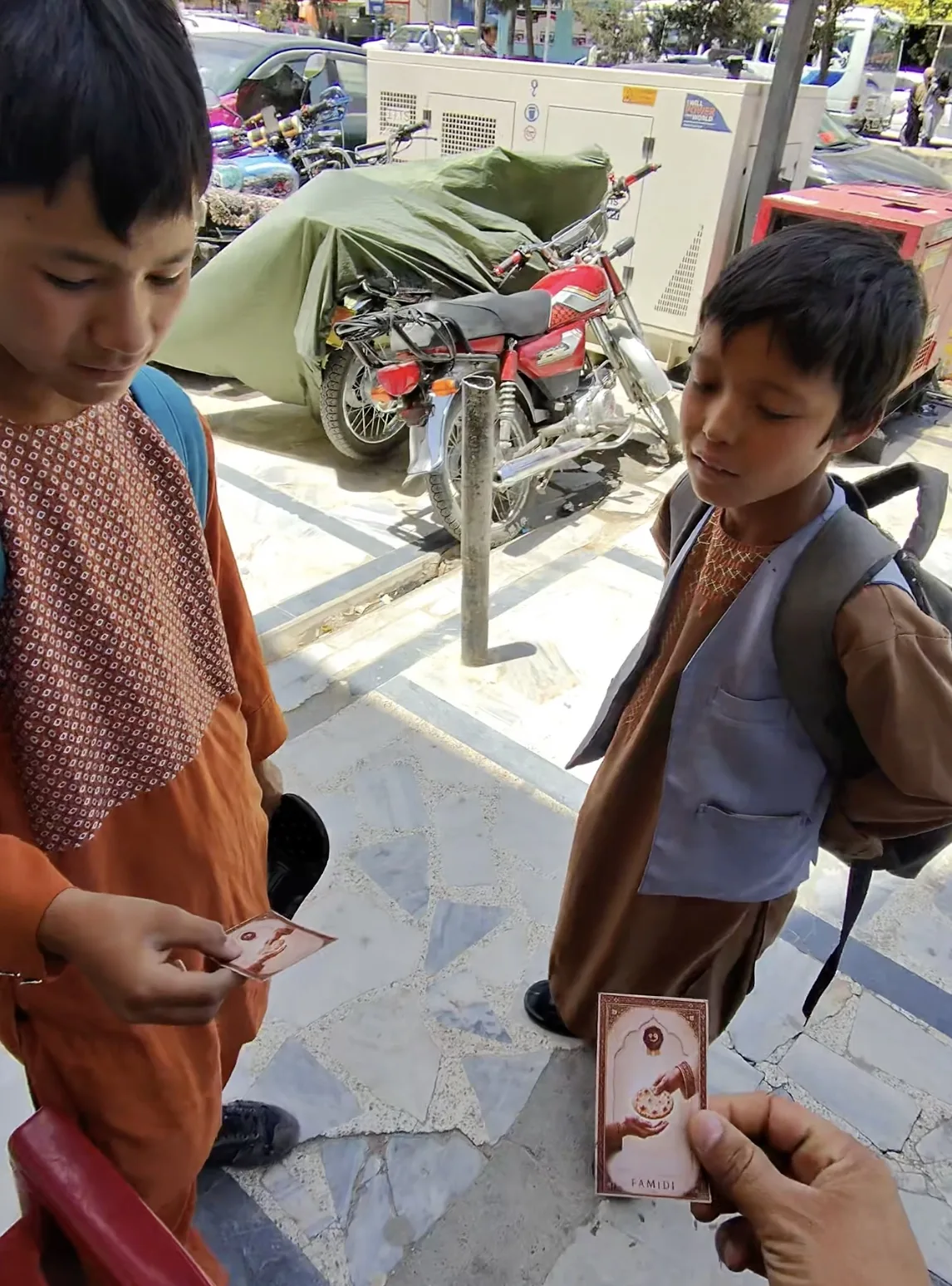
Famidi’s response was a Naan Card. Through the participating bakery model, the card provides seven fresh naans each day for thirty days. It does not solve an income gap, but it makes one daily need more predictable.
The public record includes the original field post and the wider 2026 Naan Drive archive: card preparation, handoffs, bakery visits, and repeated bread collection. Together they show both the moment of support and the routine meant to follow it.
See the original field update.
This account was expanded from a dated Famidi field post and reviewed against the program archive. The original post remains available for context.
Instagram field post ↗